


Manage a dynamic biological system
During fed-batch cultivation, upstream bioprocesses continuously evolve. Nutrient consumption, metabolite formation, biomass evolution, oxygen demand, and product expression can change throughout the run, while many process decisions still rely on periodic offline measurements. This creates a visibility gap between how the culture behaves and what operators can actually observe.
Critical biological events such as nutrient limitation, metabolic shifts, stress responses, or changing substrate demand may occur between samples and remain unnoticed until their impact on productivity and quality is already established. The challenge is not simply to measure more parameters. It is to understand the biological trajectory of the culture early enough to act while the process can still respond.
What is upstream bioreactor monitoring?
Upstream bioreactor monitoring is the continuous observation of biological and process parameters during cell culture or fermentation. Its purpose is to help teams understand process behavior, detect deviations earlier, and support better process control during critical production phases.
In fed-batch bioprocessing, this means moving beyond isolated analytical snapshots and gaining a clearer view of how the culture evolves over time. Continuous monitoring helps reveal what happens between samples and supports earlier decisions on feeding, process adjustments, and investigation triggers
The critical process window: fed‑batch phase in the bioreactor
The fed-batch phase is where upstream performance is built. Feeding strategy, nutrient availability, and metabolic balance directly influence growth, productivity, and final batch outcome. At this stage, small deviations rarely cause immediate process failure. Instead, they progressively reduce culture performance, increase variability, or limit the usable output of the batch. By the time these effects are confirmed through offline analysis, part of the batch potential may already be lost. Continuous in-process visibility helps close this gap by showing how the culture evolves during the hours where yield, consistency, batch trajectory, and product quality are still being shaped.


Understand the culture trajectory, not just individual measurements
Effective upstream bioprocess control depends less on isolated analyte values and more on understanding how the biological state of the culture is evolving. A glucose concentration alone provides limited context. What matters is whether nutrient demand is increasing, whether metabolism is shifting, and whether the culture remains within its intended operating window.
This is the principle of process-state awareness: understanding where the culture is, how it arrived there, where it may be heading, and whether action is needed.
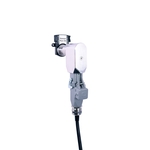
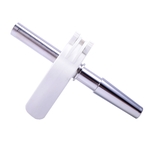
Inline Raman spectroscopy supports this by generating real-time molecular information directly from the bioreactor. When combined with appropriate chemometric or machine-learning models, Raman measurements can provide time-resolved insight into nutrients, metabolites, viable cell density, titer, and other process and quality-relevant variables, depending on the intended use and model validation strategy.
Raman spectroscopy as a PAT tool for bioprocess monitoring
Raman spectroscopy is widely used in Process Analytical Technology (PAT) because it can provide real-time, in situ insight into critical process variables. In upstream bioprocessing, Raman-based PAT strategies can support process understanding, monitoring, and control by helping teams interpret nutrient consumption, metabolite formation, and culture behavior as the run progresses.
This is especially valuable during fed-batch operation, where nutrient demand and metabolic behavior do not always follow a fixed schedule. By revealing biological transitions as they occur, Raman-based monitoring helps operators detect emerging process drift before it becomes visible as lost productivity, increased variability, or batch deviation.
Align feeding with real-time needs of the culture
With continuous visibility into culture behavior, operators can act on what the culture is showing during the run. For example, a change in glucose consumption, lactate formation, biomass evolution, or another Raman-derived process indicator may show that the culture is moving away from its expected trajectory. Instead of waiting for the next offline result, teams can decide whether to adapt the feed timing, adjust the feed rate, investigate a potential nutrient imbalance, or maintain the current strategy because the process remains within its intended operating window.
This enables teams to move from observation to action during the hours where the batch is still responsive:
- If nutrient demand increases faster than expected: review the feeding profile and adapt feed timing before limitation affects productivity.
- If excess substrate or metabolite accumulation is detected: reduce the risk of overfeeding and metabolic imbalance by adjusting the feeding strategy.
- If the culture deviates from its expected trajectory: trigger investigation earlier, while corrective action can still influence the outcome.
- If the culture remains stable: confirm that the current strategy is appropriate and avoid unnecessary intervention.
- If a metabolic transition occurs at a variable time point: introduce feed based on the actual process state, not only on a fixed schedule.
The operational shift is clear: from recipe-driven operation to behavior-driven control. The feeding strategy is no longer treated as a fixed schedule that must be followed until the next sample confirms otherwise. It becomes a decision point that can be reassessed during the run, based on whether the culture is consuming nutrients as expected, showing signs of metabolic change, or approaching a process state where intervention would protect productivity.
In practice, teams move from looking back at what happened to deciding what should happen next. The key question becomes: "What is the culture showing right now, and does it require action?"


Protect yield and quality at the point where batch outcome is shaped
By maintaining the culture closer to its intended operating window during the fed-batch phase, manufacturers can act before small deviations become accumulated performance losses. This supports more consistent process performance and helps reduce variability that can affect both yield and product quality. The value does not come from monitoring alone. It comes from using real-time signals to decide whether to feed earlier, delay or reduce feeding, investigate a shift in metabolism, or confirm that the current process trajectory remains acceptable.
This creates value in three areas:
- Higher yield per batch – Real-time insight into substrate demand and metabolic behavior helps operators maintain conditions that support productivity during the most critical phase of the run. In upstream bioprocess control, inline Raman monitoring helps scientists identify the optimal time to introduce feed, supporting increased yield.
- Greater batch consistency – Continuous bioreactor monitoring helps detect process drift earlier, reducing variability caused by unseen biological transitions between sampling points. This supports more predictable culture trajectories, more consistent fed-batch performance, and improved control of conditions that influence product quality.
- Better use of existing bioreactor capacity – By improving control during the run, manufacturers can increase productive output from existing assets without changing process design or installed capacity. The value comes from acting earlier, when culture performance can still be influenced.
How continuous real-time monitoring changes day-to-day operations
Continuous process visibility shifts upstream operations from:
- Reactive to proactive control: operators act while the process is still adjustable, instead of confirming deviations after sampling.
- Recipe-driven to behavior-driven operation: feeding reflects actual culture demand, not only predefined assumptions.
- Variable runs to controlled trajectories: the culture is kept closer to its intended operating window, supporting consistent process execution and more predictable quality outcomes.
- Conservative to performance-driven production: teams can reduce unnecessary safety margins and make better use of process potential.
In practical terms, this means better decisions at the point where they matter most: during the fed-batch phase, before the final batch outcome and product quality are fixed.


Real-time upstream bioprocess control
At BICRO BIOCentre, inline Raman monitoring helped scientists follow metabolic changes during an upstream bioprocess in real time. The team could identify the point at which bacteria switched from one carbon source to another, enabling feed introduction at the optimal time. Because this metabolic switch did not occur at exactly the same time in every run, real-time monitoring provided decision support that could not be achieved through fixed feeding schedules alone.
This case demonstrates the operational value of continuous process visibility in a concrete decision scenario. The team did not only observe that the process changed. They could identify when the metabolic switch occurred, recognize that the timing varied from run to run, and use this information to introduce feed at the right moment. In practice, the insight supported a specific action during the process, which helped improve production and increase yield.
This study illustrates how inline Raman monitoring provides actionable, real-time insight into culture behavior, enabling earlier and more confident process decisions during the fed‑batch phase.
Why Endress+Hauser?
Creating value from continuous process visibility requires more than instrumentation. It requires the ability to translate process information into reliable decisions, integrate PAT insights into operational workflows, and support implementation in regulated bioprocess environments
Endress+Hauser combines decades of Raman spectroscopy experience, bioprocess application knowledge, and GMP-focused implementation support to help manufacturers transform real-time culture insight into measurable process improvement. From development to manufacturing, our experts support teams in defining the right measurement strategy, connecting Raman insight to process decisions, and maintaining confidence across the technology lifecycle.
Where relevant, our teams can also support discussions around model development and lifecycle management, system integration, qualification expectations, and the practical deployment of Raman spectroscopy in GMP-regulated environments.




Reveal the hidden biology between samples
What happens between sampling points can shape upstream bioprocess outcomes. Nutrient limitations, metabolic transitions, stress responses, and changes in substrate demand may remain invisible when relying only on offline analytics. This white paper explains how Raman spectroscopy can help reveal the biological trajectory of a culture and support earlier, better-informed decisions.
Inside, you’ll explore:
- Why process visibility matters as much as process measurement
- How continuous monitoring uncovers hidden biological events between samples
- Why understanding process trajectory can be more valuable than individual analyte values
- How process-state awareness supports earlier intervention and better outcomes
- How Raman-derived insights can support PAT, process control, and scale-up
- A practical framework for identifying where continuous process visibility can create value

